
Why Pay for a Website When a Facebook Page is free?
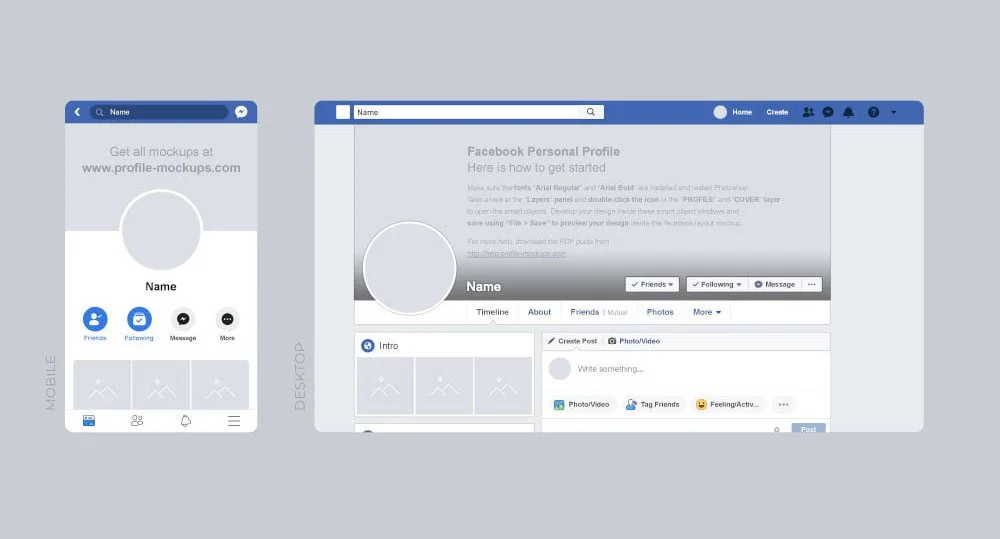
It is the most common debate in small business marketing: "Why pay for a website when a Facebook Page is free?"
The short answer is the difference between owning a home and renting a room in a noisy hotel where the landlord keeps changing the locks.
Here are the five critical reasons why a social media page can never replace a dedicated website for a Main Street business.
1. The "Rented Land" Problem (Ownership)
This is the single biggest risk. When you rely solely on Facebook or Instagram, you are building your business on "rented land."
Zero Control: Meta (Facebook/Instagram) changes its rules constantly. They can restrict your reach, suspend your account without warning, or change the layout effectively hiding your contact info.
The "Pay-to-Play" Shift: Years ago, if you posted on your business page, most of your followers saw it. Today, the "organic reach" is often less than 5%. To get your own followers to see your updates, you often have to pay for "Boosted Posts."
Asset Value: You cannot sell a Facebook page. You can sell a website. As we discussed in your blog post, a website is an owned asset; a social profile is just a user account.
2. Invisible to Search & AI (The "Walled Garden")
Google and the new AI Search tools (ChatGPT, Gemini) struggle to "see" inside social networks.
No SEO: If someone searches "Best plumber in [City]," Google prioritizes local websites and Google Business Profiles. It rarely ranks a Facebook Page high in the results unless the competition is zero.
The AI Block: Most social media content is behind a login wall. If a user asks ChatGPT specifically for "services offered by [Business Name]," and that info is only on an Instagram image caption, the AI likely won't find it. A website provides the structured text that AI needs to recommend you.
3. The Distraction Factor (Competitors)
Social media platforms are designed to keep users scrolling, not buying.
The Environment: When a customer is on your Facebook page, they are surrounded by red notification dots, chat bubbles, and—worst of all—ads for your competitors.
The Website Difference: A website is a distraction-free zone. Once they are there, the only business they see is yours. You control the journey from "Home Page" to "Book Now" without a cat video interrupting the process.
4. Limited Audience (Not Everyone is on Social)
It is a mistake to assume every customer uses social media.
The demographics: While huge, not everyone has an Instagram or Facebook account, and many who do are dormant users.
The "Professional" Customer: High-value clients often view a business without a website as a "hobbyist" or "side hustle." A dedicated website (even a simple one) signals permanence and professional legitimacy.
5. Data & Analytics (You Fly Blind on Social)
Facebook gives you "Insights," but they own the real data.
Retargeting: With a website, you can install tracking pixels (like Google Analytics). This allows you to build a list of people who visited your "Pricing" page but didn't buy, so you can market to them later.
Customer Lists: On social media, you don't know who your followers are. On a website, you can capture email addresses and phone numbers, moving those customers off the "rented land" and into your own database.
Summary Analogy
Think of it this way:
Social Media (Facebook/IG) is the Billboard on the highway. It’s great for getting attention and shouting about a sale.
Your Website is the Store. It is where the transaction happens, where the inventory is organized, and where you actually close the deal.
You can have a store without a billboard, but a billboard without a store is just a sign pointing to nowhere.